
news
All In: The Aboriginal Flag, Reconciliation Week, and the Story Behind the Symbol
May
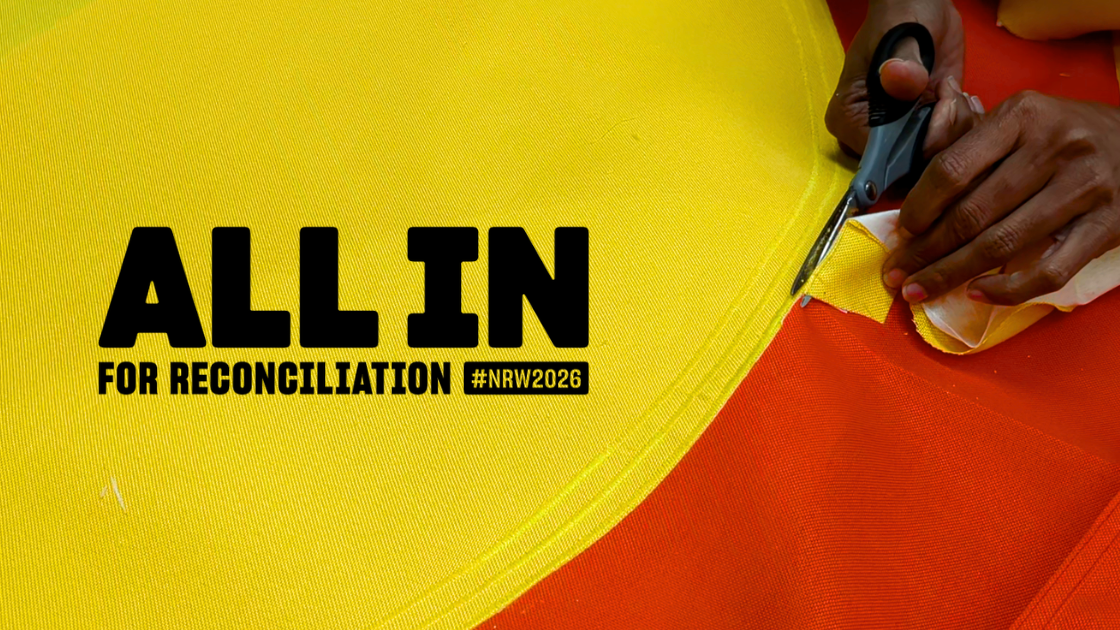
Every year from 27 May to 3 June, Australia observes National Reconciliation Week. This week is time set aside to learn about shared histories, reflect on the relationship between Aboriginal and Torres Strait Islander peoples and the broader Australian community, and consider what meaningful progress looks like. This year’s theme is All In, a phrase that carries a straightforward challenge: reconciliation isn’t something that happens passively. It requires active, ongoing participation from everyone.
For Flagworld, Reconciliation Week has a particular resonance. Flagworld holds the exclusive licence to manufacture the Australian Aboriginal Flag; a responsibility we handle with great care and pride.
What the Flag Is, and Where It Came From
The Australian Aboriginal Flag was designed by Harold Thomas, a Luritja man from Central Australia, in 1971. It was first raised publicly on 9 July of that year at a land rights rally in Victoria Square, Adelaide.
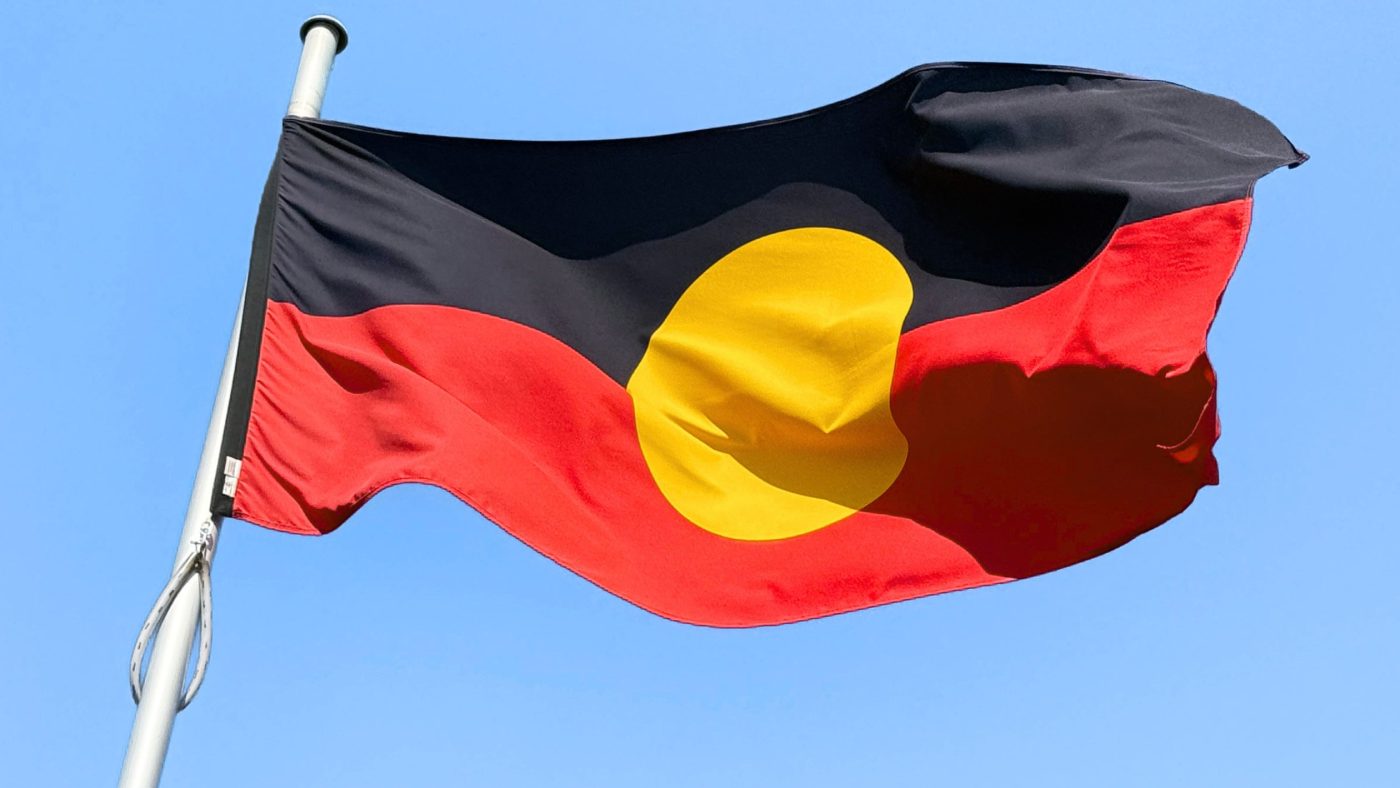
The flag design is simple. A horizontal divide: black on top, red beneath, a yellow circle at the centre. Thomas has plainly described the meaning of each element: Black represents the Aboriginal people of Australia; Red represents the red earth, the ochre used in ceremony, and Aboriginal peoples’ spiritual relationship with the land; and Yellow represents the sun, which Thomas described as the giver of life and protector.
The flag was not immediately an official symbol. It took more than two decades of advocacy before the Australian Government proclaimed it a Flag of Australia under the Flags Act 1953 in 1995; placing it alongside the Australian National Flag and, later, the Torres Strait Islander Flag as one of three official flags of the nation.
Cathy Freeman and the Flag’s Cultural Moment
If there is a single moment that brought the Aboriginal Flag into broader consciousness, it is likely Cathy Freeman’s victory lap at the 1994 Commonwealth Games in Victoria, Canada.
After winning the 200-metre sprint, Freeman carried both the Australian National Flag and the Aboriginal Flag as she completed her lap. It was a breach of protocol, as athletes were expected to carry only their country’s national flag. Despite displeasure from officials, Freeman did it again after winning the 400 metres.
Six years later at the Sydney 2000 Olympics, Freeman won gold in the 400 metres in front of a home crowd of 110,000 people and again draped herself in both flags. The photograph circled the globe.
It’s a useful reminder that flags carry meaning beyond their physical form. What gets printed on a piece of fabric matters.
A Complicated Legal History
In 1997, Harold Thomas was recognised by the Federal Court as the author and copyright holder of the flag’s design. In the years that followed, licensing arrangements (including an exclusive deal with a clothing manufacturer) meant that some organisations, including Aboriginal community groups, were restricted in reproducing the design on merchandise and apparel. The situation drew significant criticism.
In January 2022, the Commonwealth government announced it had reached an agreement with Thomas to acquire the copyright. The design became freely available for the public to reproduce on all mediums. Thomas retains his moral rights as the flag’s creator, and the right to be identified as its author.
Under the current arrangement, Carroll & Richardson Flagworld remains the exclusive licensed manufacturer for physical flags, pennants, banners and buntings. Royalties from those sales are directed to support Aboriginal and Torres Strait Islander organisations.
What ‘All In’ Actually Means
The 2026 theme was developed by Reconciliation Australia, the independent not-for-profit that leads and supports reconciliation across the country. The organisation has been deliberate about what the phrase is intended to communicate.
Reconciliation, in their framing, has historically placed a disproportionate burden on Aboriginal and Torres Strait Islander peoples to educate, advocate and push for change. All In is a call for that to shift; for non-Indigenous Australians in particular to take a more active role, with recognition that shared progress requires shared effort.
This year also marks Reconciliation Australia’s 25th anniversary, giving the week additional weight as a moment to assess how far the conversation has come and how much remains to be done.
For individuals and organisations looking to engage meaningfully, Reconciliation Australia’s website offers practical resources: information about the history behind the week’s dates (the 1967 Referendum and the 1992 Mabo decision), guides for developing Reconciliation Action Plans, and event listings across the country.
On Flying the Flag
One of the more tangible things any Australian business or institution can do is fly the Aboriginal Flag. Many councils, schools, sporting clubs and government buildings now fly all three official flags of Australia as standard practice.
For Flagworld, manufacturing that flag year-round is the day-to-day reality of the business. Respect for the flag is something the company thinks about concretely: the quality of the materials, the accuracy of the colours, the care taken in production. In that sense, being all in is less of a declaration than a standard.
National Reconciliation Week 2026 runs 27 May to 3 June. For more information, visit reconciliation.org.au.
